
The background
The international scientific community is increasingly recognizing antibiotic resistance as the most significant health crisis of the twenty-first century. It is a multifaceted challenge that poses dire consequences for global health systems. Projections suggest that if this issue goes unaddressed, antibiotic resistance could lead to approximately 10 million deaths annually, matching the death toll from cancer. Undeniably, this alarming statistic underscores the threat to public health as the rise of resistant bacteria could render many current medical treatments ineffective. This could complicate routine surgeries and procedures that rely on effective antibiotics for infection prevention.
Considering the gravity of this situation, governments and global health organizations, such as the World Health Organization (WHO), have heightened their focus on combating antibiotic resistance. They are investing significantly in research initiatives aimed at developing new antimicrobial strategies designed to outsmart bacterial defences, thus minimizing the likelihood of resistance.
One type of bacteria that Our Light Solutions are effective at killing is Methicillin-resistant Staphylococcus aureus (MRSA). It’s caused by a type of staph bacteria that has already become resistant to many of the antibiotics used to treat ordinary staph infections.
Most MRSA infections occur in people who’ve been in hospitals or other health care settings, such as nursing homes and doctor’s surgeries. Particularly, infections are associated with invasive procedures or devices, such as surgeries, intravenous tubing or artificial joints. MRSA can spread by health care workers touching people with unclean hands or people touching unclean surfaces
The environment
This study carefully monitored and analysed the sanitising effects of Our Lights on the surfaces and medical equipment within three doctor’s rooms, two examination rooms, and surfaces in the waiting room.
The description of each examined room is as follows:
Waiting Room
The waiting room was carpeted, with 12 chairs, a coffee table, umbrella stand and clothes hanger. It had a total area of 30 m² with 6 lighting fixtures.
Doctor’s Room 1
Doctor’s room 1 had 4 chairs, a desk, a medicinal cabinet and standard computer equipment. There was a window that allowed for natural lighting. The total area was 22 m² with 4 lighting fixtures.
Doctor’s Room 2
Doctor’s room 2 had 3 chairs, a desk and standard computer equipment. The room had a total area of 21 m² with 5 lighting fixtures.
Doctor’s Room 3
Doctor’s room 3 had 3 chairs, a desk, a medicinal cabinet and standard computer equipment. The room had a window that allowed for natural lighting. The total area was 18 m² with 2 lighting fixtures.
Medical Examination Room 1
Medical examination room 1 had a leatherette examination table with a steel structure, 2 chairs, a screen made of a steel structure and washable fabric, a steel cabinet, and a wheeled ultrasound scanner. The total area was 20 m² with 2 lighting fixtures.
Medical Examination Room 2
Medical examination room 2 had a leatherette examination table with a steel structure, 2 chairs, a screen made of a steel structure and washable fabric, a steel cabinet and ECG equipment. The total area was 16 m² with 2 lighting fixtures.
The method
The study took place over two years where during the first year, the surgery was outfitted with regular lightbulbs and microbiological samples were collected every week. Meanwhile, through the second year, the surgery was outfitted with Our sanitising LED Light Solutions. Researchers collected microbiological samples every week from the same locations.
Researchers took samples from surfaces and medical tools to collect and grow microbial cells for quantification and identification. Suspended bio-aerosols and direct contact can contaminate surfaces. As a result, researchers collected samples using 24cm² Petri dishes with both “RODAC-Weight” and sedimentation methods. In cases of wet or hard-to-reach surfaces, with humidified nylon swabs.
Key locations the samples were taken from are as follows:
• Waiting Room Desk
• Doctor’s Room 1 Door Handles
• Doctor’s Room 2 Chairs
• Doctor’s Room 3 Desks
• Examination Room 2 Examination Table
• Ultrasound Scanner and ECG System
The results
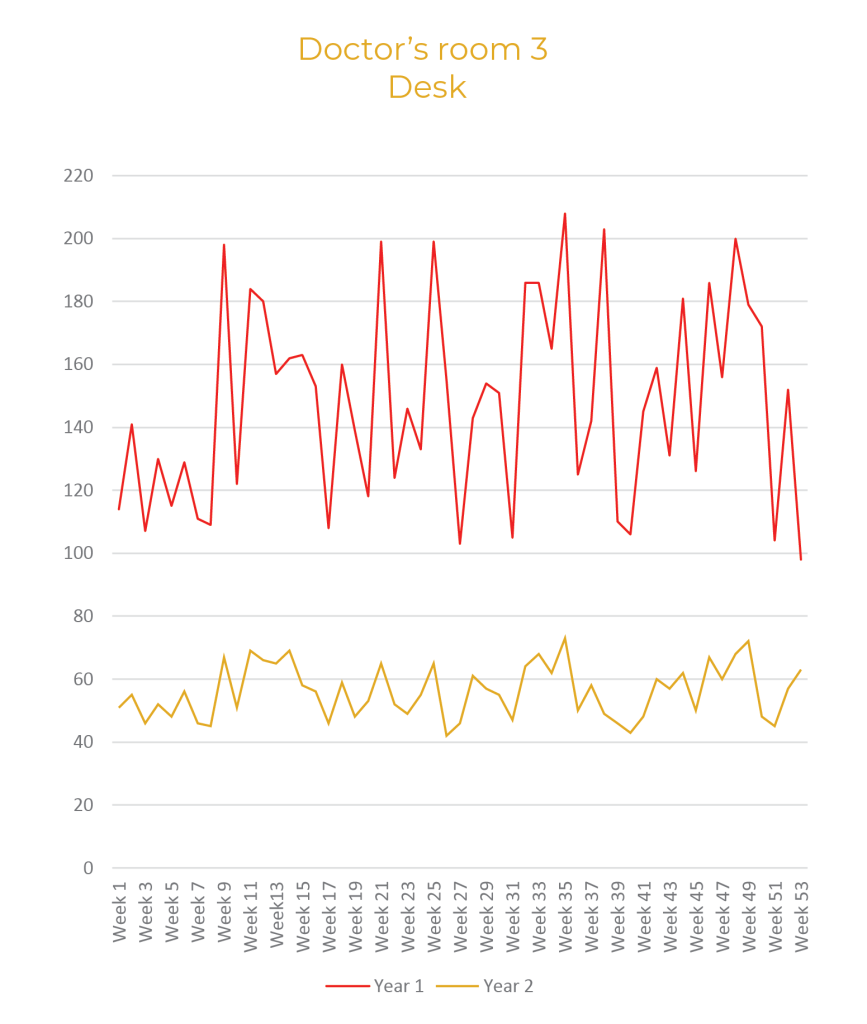
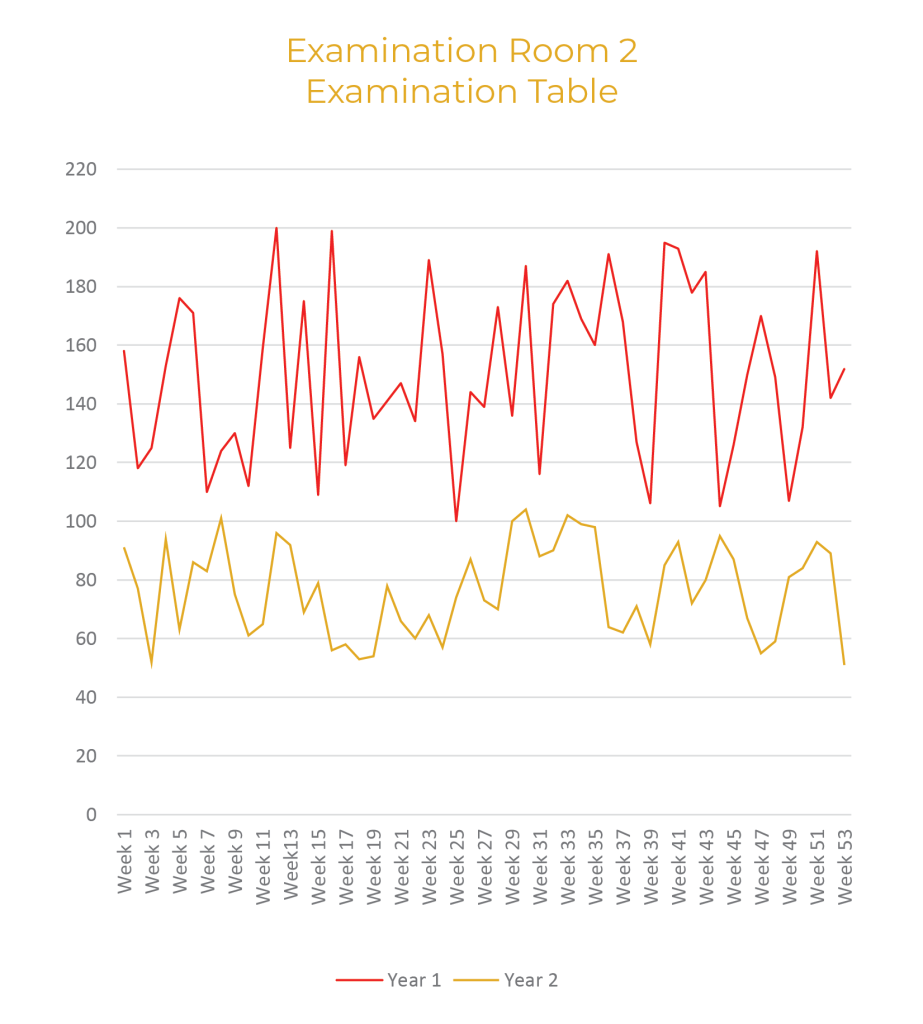
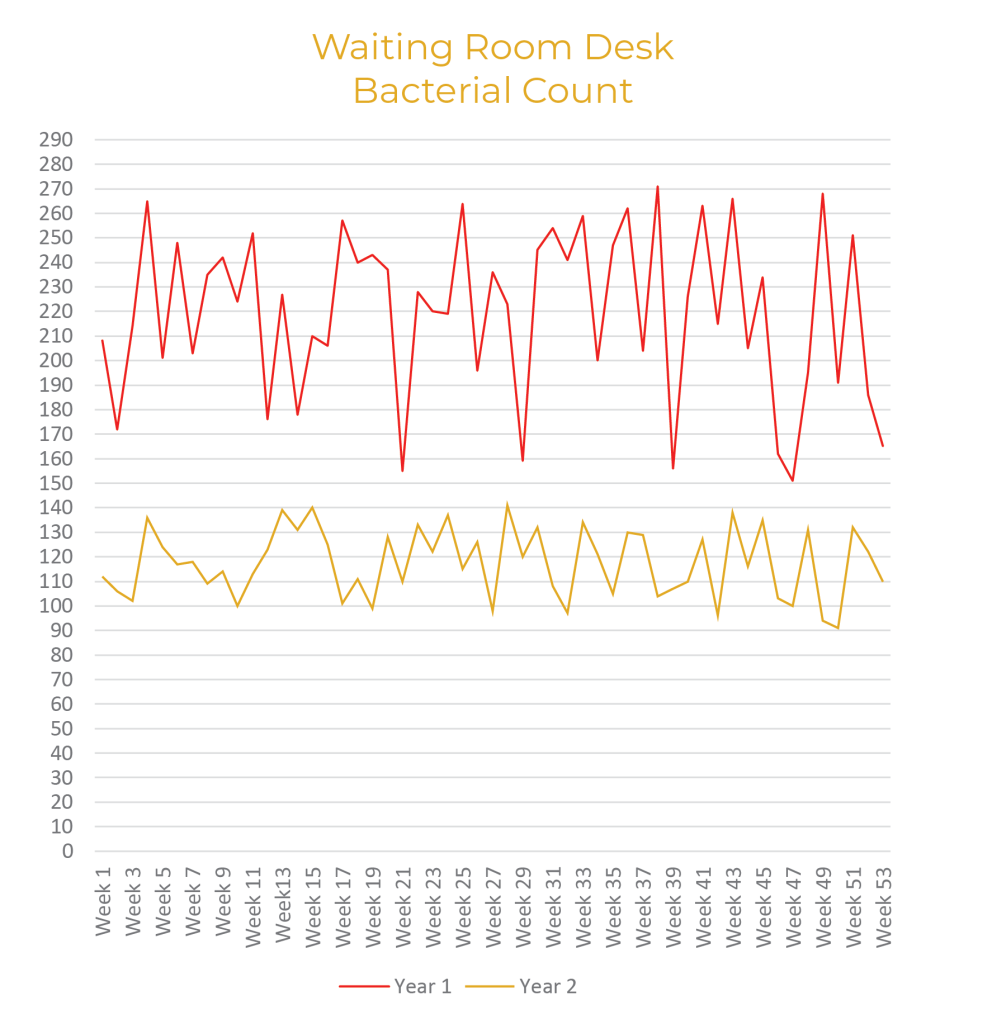
The data clearly shows that, after the installation of Our Sanitising Light Solution, the bacterial count consistently remained lower compared to measurements under traditional lighting. This proves that our lights actively improve both air and surface quality, ultimately creating cleaner and healthier home environments. Furthermore, the data demonstrates that Our Sanitising Light Solutions achieved an average bacterial reduction of 67%, with peaks reaching 79%.
The findings
The implementation of Our LED Light Solutions evidently resulted in lower bacterial counts compared to traditional lighting. Specifically, bacterial counts dropped by 44% on the waiting room desk, 54% on door handles in doctor’s room 1, 62% on desks in doctor’s room 3, 55% on the examination table in examination room 2, and 60% on the ultrasound scanner and ECG machine.
Researchers collected samples of the chairs in doctor’s room 2 twice in one day, before cleaning and afterwards. The results consistently showed low bacterial counts during the use of Our LED Light Solutions, indicating their effectiveness in controlling bacterial growth.
In conclusion, the significant reduction in bacterial counts achieved through the implementation of Our LED Light Solutions clearly illustrates their effectiveness in creating a cleaner and safer healthcare environment. The consistent low bacteria levels observed, even after cleaning, underscore the importance of innovative lighting solutions in infection control strategies. With proven results across various surfaces, these LED solutions not only enhance hygiene but also promote the well-being of patients and healthcare providers alike, highlighting their critical role in modern medical practices. Embracing such technology paves the way for healthier spaces and reinforces the commitment to excellence in patient care.
This project was carried out by Biovitae. We are the only UK approved supplier of Biovitae Sanitising Lights.